Begin with the counter task that repeats
In a compact kitchen, the same few jobs tend to claim the counter: rinsing produce, air-drying a mug, keeping a sponge close, or reaching for everyday tools. Watch what gets moved aside most often. A fix is more useful when it clears the spot you actually need, rather than creating a new place to store things you rarely use.
Before choosing anything, measure the clear work area and note which drawers, doors and the faucet need to move freely. A quick sketch with those clearances can prevent an organizer from making the room harder to use.
1. Add a temporary surface over the sink
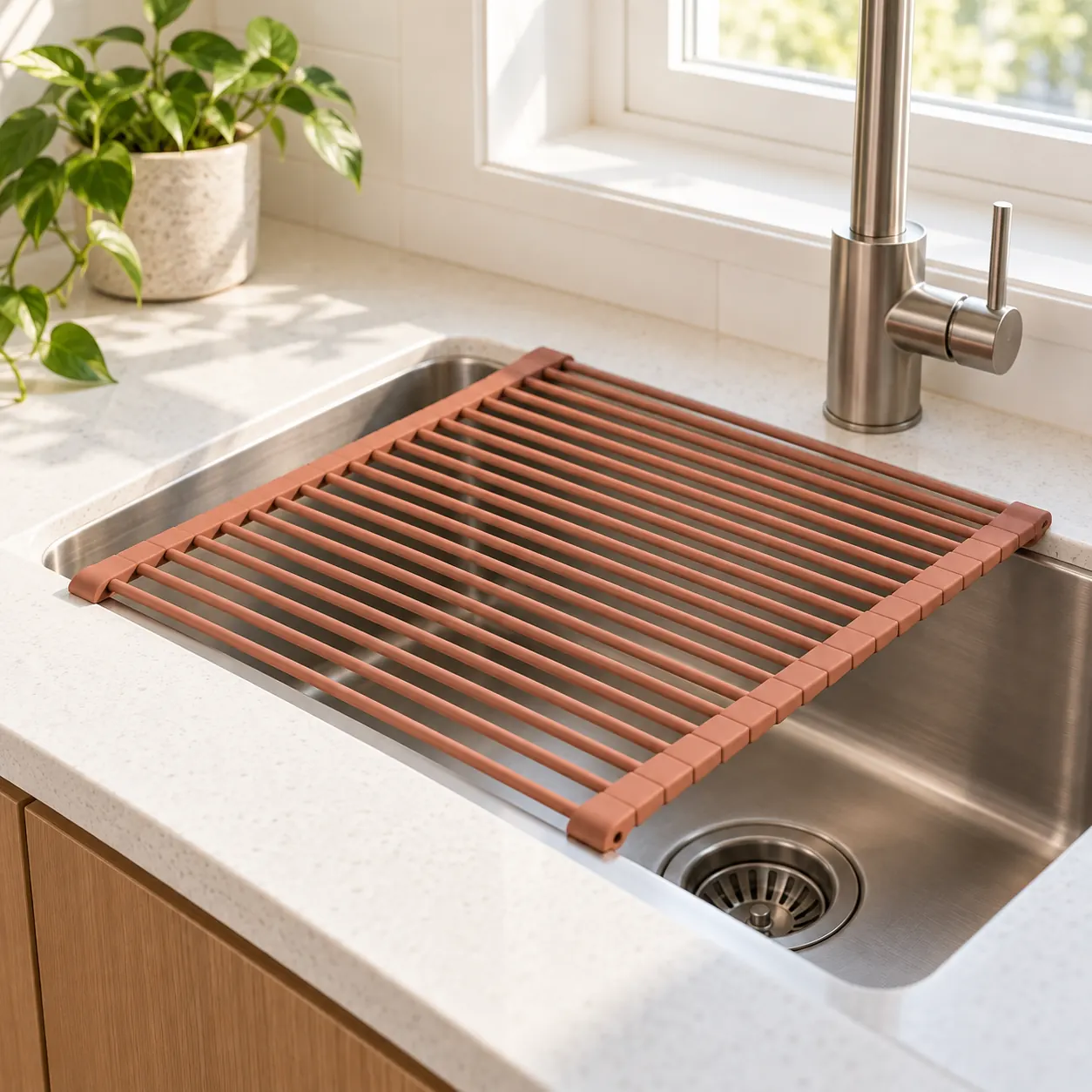
A roll-up drying mat can give a few washed items a place to drain without permanently occupying the counter. It is most useful when you can roll it away after the task and store it nearby. Measure the usable sink span and check how the mat is meant to rest on the edges; a poor fit can feel unstable or block access to the basin.
Probably not a fit if your sink has an unusual shape, the faucet needs the same space, or you would leave the mat out all day and lose access to the sink.
A five-minute sink-fit worksheet
Before looking at a rack or over-sink colander, sketch the basin from above. Write down the clear span between the two places where an accessory could rest, the front-to-back room at those edges, and the location of the faucet base and handles. The outside width of a sink is not the same as the usable resting span. Measure where an object would actually sit, including any rounded rim or raised lip.
Next, place a towel or a cardboard strip across the intended area without covering the drain. Check whether you can still turn on the faucet, wash a pan, and lift the temporary surface away without knocking another object. This is a layout test, not a load test; do not place weight over a sink on an improvised support.
Finally, note the cabinet or drawer where the item would live after use. Compare your notes with the current listing for the exact size and variant you would choose, including its support method, care instructions and stated load guidance. If the listing omits a measurement you need, do not guess that the product fits. You can keep using an existing towel or a smaller drying batch while you look for a better fit.
- Clear resting span: ____ in · front-to-back room: ____ in.
- Faucet and handle clearance: ____ in · drain still accessible? Yes / No.
- Storage spot after use: ____ · selected listing and variant checked? Yes / No.
- Stop if either side lacks a stable resting edge, the faucet is blocked, or the item has nowhere practical to go after use.
2. Rinse produce over the basin
An over-sink colander can keep rinsing contained and free the counter from a separate bowl or strainer. Confirm its stated width and how it is supported against your sink before relying on it. Leave enough room to turn on the water and lift the colander out without bumping the faucet.
For a small or divided sink, a regular colander that stores inside a cabinet may be simpler than a bridge-style one.
3. Give wet sink tools one contained home
A compact drainable caddy can keep a sponge and brush together instead of spreading them along the sink edge. Check where the water goes, whether the caddy sits securely, and if the sink lip leaves enough room. Empty and clean it as part of your normal sink reset so the organizer does not become another damp corner to manage.
4. Use the inside of a cabinet door
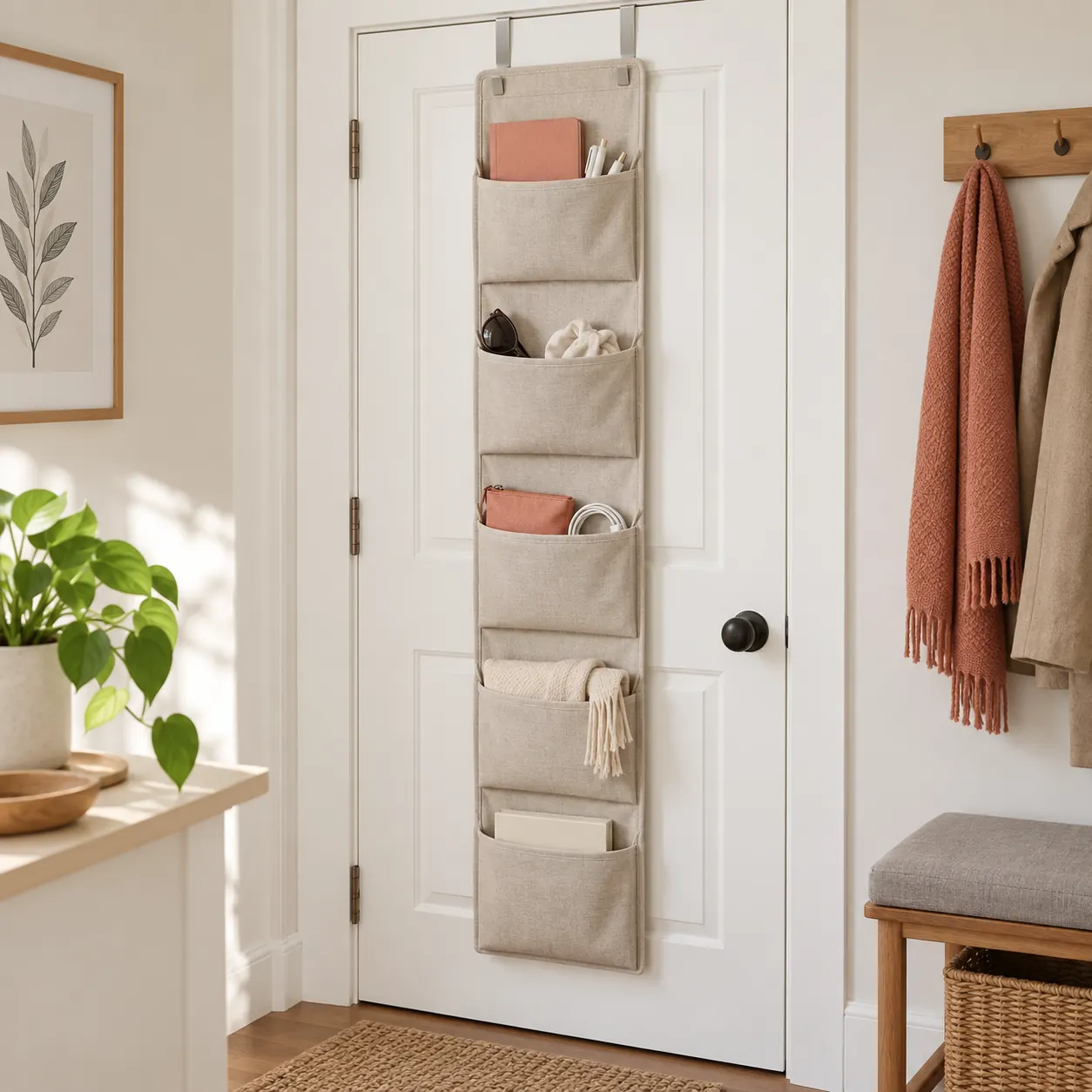
Lightweight tools such as measuring spoons or a small dish towel may fit on the unused side of a cabinet door. Over-cabinet hooks are easy to try, but the door still needs to close cleanly. Check the hook thickness against the door and frame, and make sure nothing inside the cabinet will hit the hanging item.
Avoid loading a door accessory with heavy cookware unless its current instructions clearly support that use.
5. Put seldom-used items beneath a shelf
An under-shelf basket can use the open space below a cabinet shelf for packets, wraps or other light items. Measure shelf thickness and the vertical gap below it, then consider what must still fit on the shelf underneath. A basket that steals the clearance you need can simply move the clutter from one place to another.
6. Keep the everyday tools within one easy reach
Choose a small group of tools you use most often and give them a consistent home near the work area. That might be a shallow drawer section, a small container that can move off the counter, or a few hooks on a suitable cabinet. Keeping the group limited makes it easier to put everything back and preserves the surface for food preparation.
7. Make the counter quick to reset
A clear landing spot for groceries and a two-minute reset after cooking can protect the space you have already reclaimed. Put away items that do not belong to the next task, wipe the work area, and return the sink tools to their home. The best small-kitchen fix may be a simpler routine paired with one well-chosen accessory.
Measure first, then decide what earns its place
Compare the item's stored footprint with the space or time it gives back. Check the current product listing for dimensions, materials, care instructions and intended use; those details can change. Skip a fix if it blocks a drawer, narrows your main prep area, or takes more effort to set up than the annoyance it solves.
- Measure the clear sink opening, shelf depth and cabinet-door gap before ordering.
- Keep temporary work surfaces removable and easy to clean.
- Choose a light-duty organizer for light items, and follow the product's stated limits.
- If you rent, consider whether the mounting method can leave marks or residue.