Start with the thing that has no home
A rental can feel short on storage even when a little unused space is hiding behind a door or beneath a shelf. Start with one recurring annoyance: shoes crowding the entry, bedside essentials on the floor, or small pantry items getting lost at the back. Measure the objects as well as the space so the new storage solves the real problem.
A good no-drill change uses a space you already have and stays easy to remove. It should not make a door difficult to close, block a walkway, or turn a useful shelf into an awkward one.
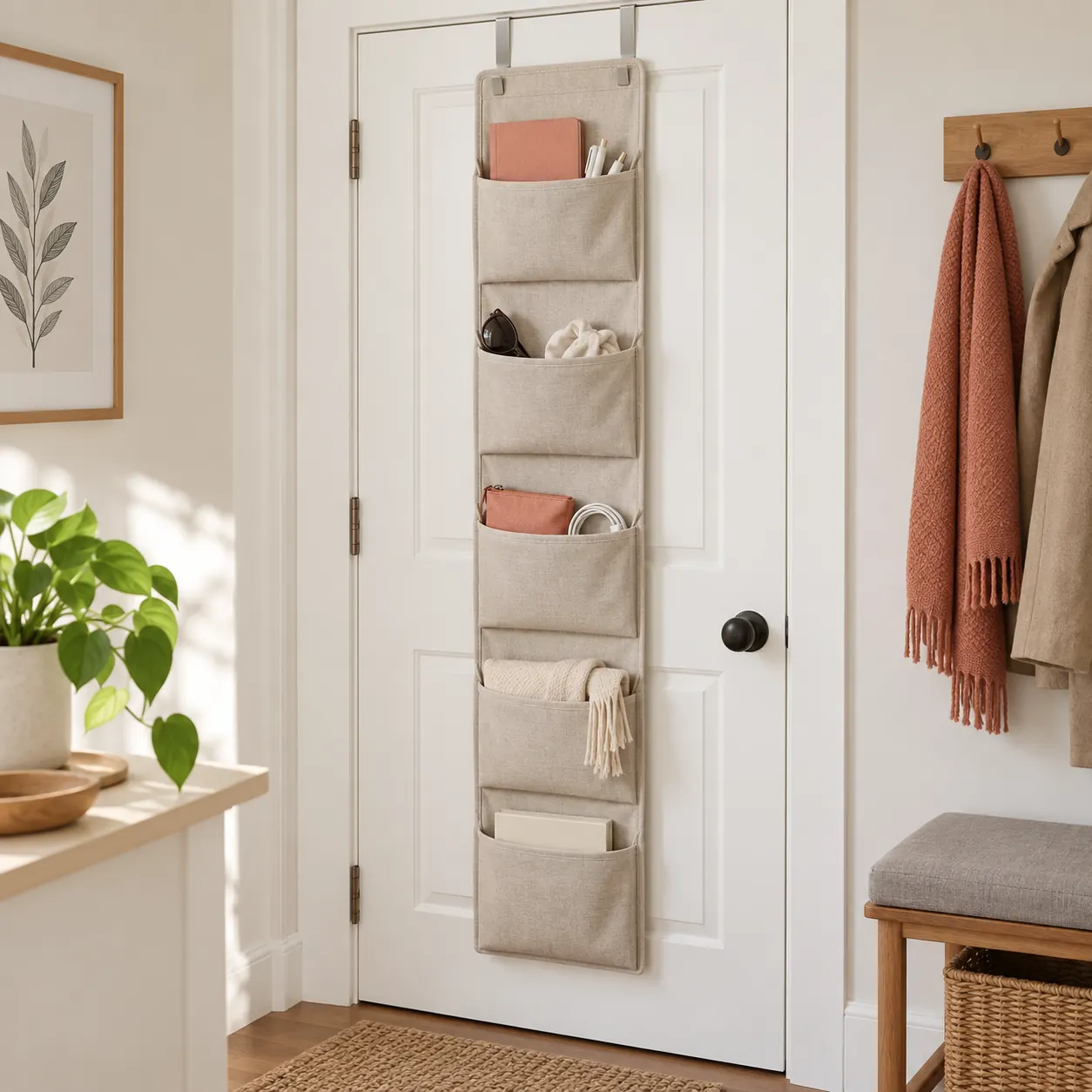
Use an over-door organizer for light, easy-to-reach items
A hanging pocket organizer can put small household items behind a door instead of on a chair or counter. Decide what belongs there before filling every pocket; concentrating too much weight can pull on the hooks or make the door harder to use. Check the organizer's dimensions and the door's top clearance, handle position and swing.
Probably not a fit for a door that must close tightly, a narrow passage, or heavy objects unless the current product instructions allow them.
Use the underside of a shelf carefully
A slide-on wire basket can add a shallow layer for light supplies without taking up the shelf surface. Measure the shelf's thickness and depth, then check how much vertical space remains below it. Leave room for items that must pass in and out and make sure the basket will not catch on a neighboring shelf or cabinet frame.
Treat cabinet-door hooks as a clearance decision
Over-cabinet hooks are handy for a towel or another light item you reach for often. Before trying them, check the door-to-frame gap and close the door with the accessory in place. Look inside the cabinet too: a shelf or stored item can collide with anything hanging on the inside of the door.
Keep bedside essentials off the floor
A slim bedside caddy may be useful when there is no room for a nightstand. Measure the edge it will attach to and consider what you want within reach, such as a book or charging lead. Leave the path beside the bed clear and follow any stated loading guidance; a caddy should not pull on delicate upholstery or a narrow frame.
Use adhesive only when the surface is suitable
Adhesive hooks and clips depend on surface condition, preparation and time to set. Painted, textured, dusty or recently cleaned surfaces may behave differently, and removal can still affect a finish. Read the current mounting and removal instructions, test a discreet spot where appropriate, and choose another method if protecting the surface is more important than the convenience.
Plan a simple home for the items you store
No-drill storage works best when everyday items remain visible and easy to return. Group a few related things together, keep frequently used objects at a comfortable height and avoid adding storage just because a surface is available. A small basket or a single hook can be enough if it shortens the routine you repeat every day.
Check fit, load and move-out day
Before ordering, compare the listing's measurements with your actual door, shelf or furniture. Check the intended load, assembly and removal instructions, and ask whether the solution can travel with you to another home. If it needs an uncertain adhesive surface, leaves a door unable to shut or holds more than the product guidance supports, choose another approach.
- Measure door width, top clearance and the gap to the frame.
- Check shelf thickness, depth and clearance underneath.
- Keep mounted organizers to the light items their instructions support.
- Read removal guidance and protect finishes you are responsible for.